The Friends of the Florissant Fossil Beds

November 25, 2007

Friends announce partnership with Peruvian conservation group

Filed under: Conservation, Culture, Paleontology, Partnerships, Resource Management — The Friends of the Florissant Fossil Beds, Inc. @ 12:00 pm

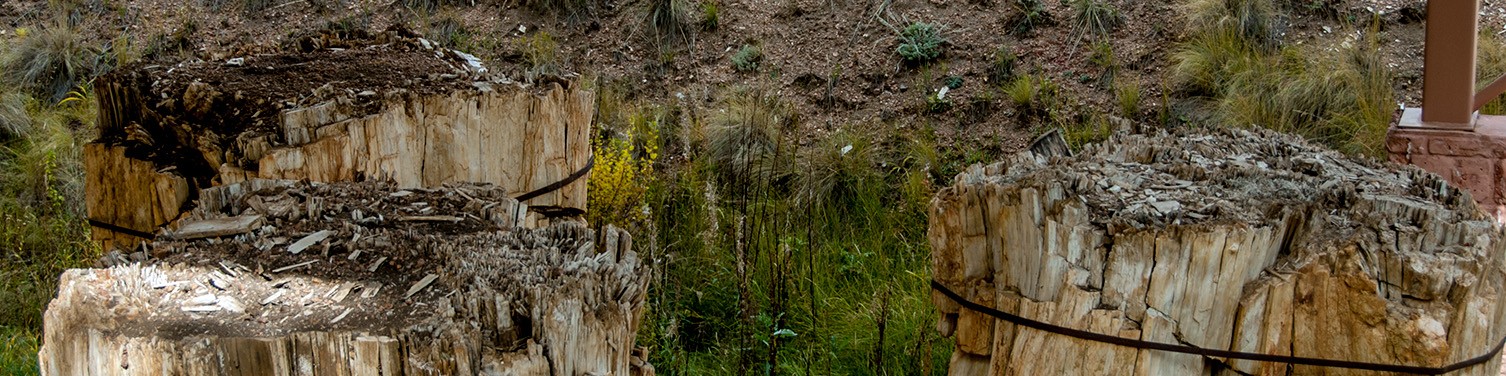
Photo of fossil logs at Piedra Chamana

At the 20th Anniversary Celebration in August, the Friends announced a new partnership with the Asociación de la Preservación y Defensa de los Restos Paleontológicos del Distrito de Sexi (Association for Preservation and Defense of the Paleontological Remains of the District of Sexi; SEXI). SEXI is a grassroots organization devoted to protecting and developing for tourism and research the petrified forest of Piedra Chamana, located near the village of Sexi, Peru.

Piedra Chamana preserves a diverse assemblage of 39-million-year-old woods and leaves from the middle Eocene, and has important implications for understanding the paleoclimate and history of low-latitude tropical forests. The fossil forest is also important as a scientific and educational resource for the people of the region.

Photo of fossil log at Piedra ChamanaFlorissant Fossil Beds National Monument paleontologist Dr. Herb Meyer and colleagues, including Dr. Deborah Woodcock of Clark University, have been providing assistance to the village of Sexi in setting up a program to monitor the fossil forest. Through a National Science Foundation grant, they were able to help arrange construction of a museum, and the National Park Service is currently assisting in exhibit design and brochure production.

The Friends hope to raise funds for SEXI that will be used for interpretive exhibits and posters, construction of a fence around the perimeter of Piedra Chamana to protect it from cattle and human impact, construction of a trail to the site. In addition, the Friends can offer information and guidance to SEXI on operating a park Friends group.

The Memorandum of Understanding will take effect upon the signature of the presidents of both organizations. It is currently being reviewed in Lima. The Friends hope this partnership will help enhance scientific knowledge, education, and conservation of this important fossil resource.

Friends President Steve Veatch presented further information about this partnership at the Geological Society of America Annual Meeting in October. To learn more about this partnership, you can contact him at sveatch@fossilbeds.org.

-Melissa Barton

Photo Credits: Dr. Herb Meyer

Learn more about Sexi and Piedra Chamana at Bienvenidos a Sexi (Spanish).

August 18, 2007

Culturally Modified Trees: Legacy of the Ute Tribes

Filed under: Culture, History — The Friends of the Florissant Fossil Beds, Inc. @ 12:00 pm

This article originally appeared on the Friends website as “Living Archaeology: Culturally Scarred Trees, Legacy of the Ute Tribes.” “Culturally modified trees” is the currently accepted term, and also includes trees that have been deliberately bent or otherwise shaped without bark peeling.

The park is currently considering plans to conduct research on culturally modified trees within the park.

Culturally Modified Trees: Legacy of the Ute Tribes

Steven Wade Veatch

For centuries, Native Americans have peeled away the outer bark of ponderosa pine (Pinus ponderosa) trees to obtain the tree’s soft inner bark (cambium layer) for food and medicine. In addition to using the inner layer of bark for food and medicinal tea, the Utes used the sap to waterproof containers and the bark to make cradleboards. Peeling leaves a permanent scar on the tree.

Today these centuries-old trees, known as culturally modified or peeled trees, mark the presence of Ute Indians who once lived in the Pikes Peak region.

A culturally modified trees is defined as “a tree that has been altered by native people as part of their traditional use of the forests” (Styrd, 1998). Culturally modified trees are an important part of the archaeological and historical record of the Utes.

Culturally modified trees provide information about Ute lifeways, disclose areas of occupation, mark paths the Utes followed, and indicate food resources.

tree1.jpgCulturally modified tree. Note ragged edge at top, probably from the bark being cut with sharpened stone and pulled down. Photo: Jo Beckwith.

When peeling trees, the Utes would make a horizontal cut through the bark on the outside of the tree with a hatchet or sharp stone. Hatchets made straight lines while a sharp stone left jagged lines. After making a cut on the tree, a sharpened branch or pole was placed under the cut and the bark was pried away from the tree. Strips of inner bark were then removed from the outer bark with a scraper.

tree2.jpgCulturally modified tree near Guffey, Colorado. Healing tissue generally obscures tool marks. Photo: Jo Beckwith.

The oval or rectangular-shaped scars left by the Utes on ponderosa pine trees can be very large–up to eight feet long and two feet wide.

Not all scars found on trees were made by Utes. Forest fires leave a triangular-shaped scar with the widest edge along the bottom of the tree. Scars caused by lightning are long and thin, extending along the length of the tree. At times lightning scars spiral around the tree. Animals like elk, porcupine, and bear also leave scars, which are often visible.

Tree-ring dating conducted by Golden archaeologist Marilyn Martorano at several Colorado sites shows that the Utes peeled most of the culturally scarred trees between 1815 and 1875 (Martorano, 1981). This period was one of profound change in Colorado. First trappers arrived, then miners came searching for gold, and finally farmers and ranchers followed–all pushing the Utes from their land. As more people swarmed into the region, food became scarce. This led the Utes to peel trees for food at a greater rate.

tree3.jpgCulturally modified tree, Florissant Fossil Beds National Monument, Florissant, Colorado. The width and length of these scars vary. NPS Photo.

There are at least 17 culturally modified trees in the Blue Mountain area of Pike National Forest, at least 26 modified trees in Florissant Fossil Beds National Monument, and a number of modified trees over 200 years old in the Manitou Experimental Forest north of Woodland Park.Although the National Historic Preservation Act protects these trees from human activity, this important archaeological resource is quickly disappearing as these trees begin to die from natural causes. The maximum lifespan of the ponderosa pine tree is between 300 to 600 years, so further research is vitally important before this archeological information is lost forever.

tree4.jpgCulturally modified tree in a ponderosa pine forest, Florissant Fossil Beds National Monument. The soft inner bark of the tree is high in calcium. Photo: D. Atkins.

References

Martorano, M.A., 1981. Scarred Ponderosa Pine Trees Reflecting Cultural Utilization of Bark. Unpublished M.A. thesis, Department of Anthropology, Colorado State University, Fort Collins, Colorado.

Styrd, A., 1998. Culturally Scarred Trees of British Columbia: A Handbook for the Identification and Recording of Culturally Scarred Trees. Arcas Consulting Archaeologists, Ltd. B.C. Ministry of Forests.

Powered by WordPress