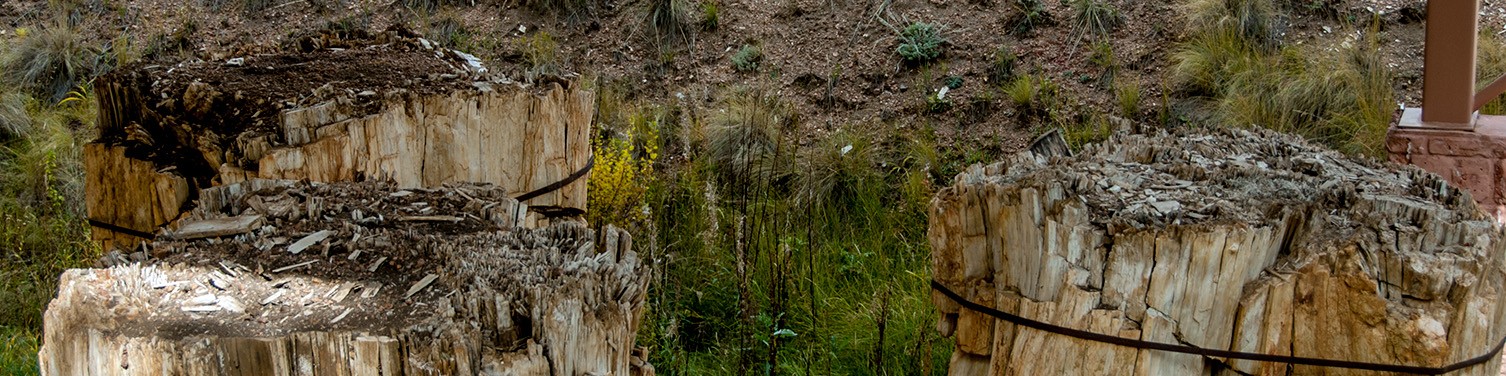
To reduce hazardous fuels on the northern boundary of Florissant Fossil Beds National Monument that have the potential to spread wildfire onto private property, the park will be conducting a prescribed burn. The burn will take place north of Upper Twin Rock Road and east of Teller Co. Rd. #1, south of the cemetary and llama farms. Burning will begin October 15th, weather permitting, and may continue for several days.
To see a map of the area designated for burning, download the fire plan PDF. To learn more about the burn, download the park’s press release in PDF format. If you have questions, contact the park at (719) 748-3253.

Student Conservation Association intern Lindsey Stecker pulling sweetclover.
Yellow sweetclover (Melilotus officinalis), an introduced European plant, grows profusely along roadways, trails, and in other disturbed areas throughout the plains and montane regions of North America, including Florissant Fossil Beds National Monument. Sweetclover is a hardy biennial that is used as fodder for livestock and for producing clover honey. Outside of cultivation, sweetclover can out-compete native plants, as well as overrun pastureland. Sweetclover is aggressive and difficult to eradicate, and seeds can remain viable in the soil for up to 30 years.
Yellow sweetclover bushes can grow from 2 to 5 feet tall and have strong taproots. At right, sweetclover grows densely along the road to the Visitor Center. Park staff, particularly Student Conservation Association interpretive intern Lindsey Stecker (Boston University) and Chief Ranger Rick Wilson, have been working hard to control the spread of sweetclover this summer.
-Melissa Barton
Photo Credits: Melissa Barton
The Ponderosa Loop Trail is expected to remain closed for maintenance until at least mid-September. The park’s other trails remain open, including the Petrified Forest Loop Trail. For more information on trails, visit the park website.

Kathy Salas (left) and Eva Lyon (right) show off their certificates with Dr. Herb Meyer, the park paleontologist.
Friday was the last day for summer paleontology interns Kathy Salas (University of Texas–Dallas) and Eva Lyon (College of Wooster). During their time here, they accomplished many projects for the park, including
- Overhauling the park’s Inventory & Monitoring Program and retaking all baseline data
- Assisting visiting researchers in the field and hosting the July 28-29 paleontology seminar
- Collecting fossils in South Park for a comparative research project
- Writing site bulletins about the park’s fossils and about resource management and research in the park (available soon in the Visitor Center)
- Assisting interpretive staff with exhibit assembly and other projects
- A complete inventory of the park’s herbarium (modern plant) collection
Summer interns help the park accomplish vital work and we are always sorry to see them go. Best of luck to Kathy and Eva in their future endeavors. The park thanks the Friends of the Florissant Fossil Beds, Inc. and the Geological Society of America for making many internships possible over the years.
The Ponderosa Loop Trail will be temporarily closed for repairs, beginning Monday, July 23. Repairs should take about a week.
 The Ponderosa Loop is a 1-mile, wheelchair- and walker-accessible mountain trail through ponderosa and aspen forest. It is a short, easy trail appropriate for families with small children and people with time constraints. Guided booklets are available at the Visitor Center. In addition to learning about the ponderosa ecosystem, hikers can see several petrified redwood stumps along the trail and may spot wildlife, including Abert’s squirrels, nuthatches, and northern flickers. If you haven’t already hiked this trail, be sure to visit after maintenance is completed.
 Edited to add: The Ponderosa Loop is expected to remain closed through mid-September.