The Friends of the Florissant Fossil Beds

July 22, 2007

Ponderosa Loop Trail temporarily closed

Filed under: Interpretation, Park Changes, Trails, Wildlife — The Friends of the Florissant Fossil Beds, Inc. @ 9:00 am

The Ponderosa Loop Trail will be temporarily closed for repairs, beginning Monday, July 23.  Repairs should take about a week.

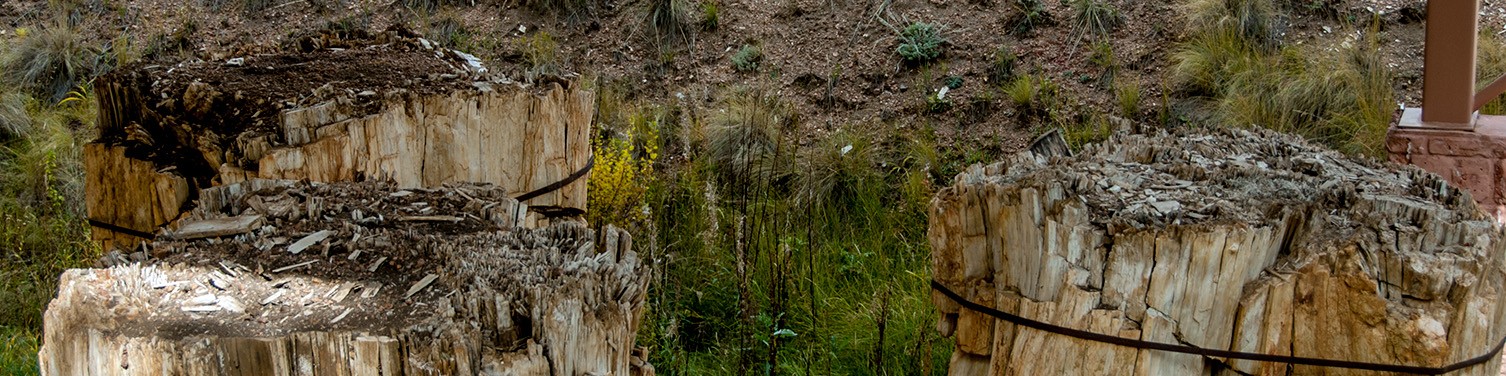
 The Ponderosa Loop is a 1-mile, wheelchair- and walker-accessible mountain trail through ponderosa and aspen forest.  It is a short, easy trail appropriate for families with small children and people with time constraints.  Guided booklets are available at the Visitor Center.  In addition to learning about the ponderosa ecosystem, hikers can see several petrified redwood stumps along the trail and may spot wildlife, including Abert’s squirrels, nuthatches, and northern flickers.  If you haven’t already hiked this trail, be sure to visit after maintenance is completed.

 Edited to add: The Ponderosa Loop is expected to remain closed through mid-September.

July 2, 2007

Filling a Niche: Linkhart Studies Elusive Owls

Filed under: Biology, Ecology, Education, Research, Science, Seminars, Wildlife — The Friends of the Florissant Fossil Beds, Inc. @ 5:00 am

Friday night’s flammulated owl (”flam”) seminar, taught by Colorado College biology professor Brian D. Linkhart, was a success. Unlike last year, this year’s weather was good for insects, and most of the flam nests at the Manitou Experimental Forest, where Linkhart has worked since 1981, are doing fine. Click on the thumbnails below to see larger photos.

Removing baby flams from the nestWe began the evening by heading out to an easily accessible nest. Flams nest in abandoned flicker cavities, which can be as high as 70 feet off the ground, but this nest is only about eight feet off the ground and can be accessed with a ladder. Reaching the higher nests requires climbing spikes. For those nests, Linkhart has to climb the tree and lower the owlets down to his students so they can weigh and measure the owlets.

Three flam owletsFlams typically lay two or three eggs in a nesting season. This nest has three owlets, all about 11 days old; each owlet weighs about 30-40 grams, approximately half of their adult weight. The flammulated owl (Otus flammeolus) is the second smallest North American owl. These owlets still have much of the white down they developed after hatching, as well as the beginnings of gray juvenile plumage. Since they’re not yet old enough to band, Linkhart uses markers to color their head feathers to tell them apart. This does not harm the owlets.

The runt of the nestBlue is the runt of the nest, almost 10 grams lighter than its siblings. Flam nests always have a runt, which almost always survives to fledging and catches up in size to its nestmates. In fact, flam owlets have a very high survival rate until fledging–their main predator is the red squirrel. After fledging the owlets are much more vulnerable to a variety of predators, including mountain lions, coyotes, great horned owls, and particularly sharp-shinned hawks.

Weighing a flam owletAfter hatching, the owlets are weighed every day. “You have to learn to be very mindful of your impact on the animals you’re studying,” Linkhart said. “In this case it means timing your work just right.” During the first week, when the owlets cannot regulate their own body temperature, the owlets can only be handled during the brief period at dusk when the female leaves the nest. By 11 days, these owlets can easily spend 20 minutes out of the nest, but Linkhart and his crew handle them during the evening, while the female is still inactive. Right now, these owlets are gaining about 4 grams a day from the diet of moths the male brings back to the nest.

Measuring the developing flight feathersIt’s also important to measure the growth of the flight feathers. Because of their nesting habits, baby flams don’t get to practice before fledging. Their first flight is normally straight down. They then climb back up the tree, flapping their wings for assistance, and repeat the process until they achieve flight. This is one of the times flams are most vulnerable to predators. The tiny adults can do little to defend their young, although they supervise the initial flights, each parent watching out for one or two fledglings.

Using an infrared cavity peeperAfter dark we headed out to a nest Linkhart and his student crew had discovered a few days before. This nest had not yet been monitored, and we took an infrared “cavity peeper” to look into it. Unfortunately, the nest had been attacked by squirrels, which eat flam eggs. We moved to a different nest and attempted to capture an adult. Unfortunately, although we saw the adults hunting and bringing moths to the nest, we were unable to capture one.

Adult flamThe adult flam stands only about six inches tall, with a 14-inch wingspan. It is the only North American owl its size with dark eyes. Flams nest almost exclusively in mature ponderosa pine forests. When Linkhart began studying flams in 1981, they were almost unknown. “I was working with accipiter hawks–forest hawks that are pretty sensitive. Richard Reynolds alerted me to the fact that flams were poorly known,” said Linkhart. “So one night he suggested we go out and look for some–moonlighting, so to speak. We found some, and that was really exciting. This was a niche that hadn’t been filled.”

Over the past 26 years, Linkhart and his colleagues have dramatically expanded our knowledge of flams, but many questions remain. Some of the questions about population, reproduction, and demography can only be asked because Linkhart’s study has been so long-term, a rareity in the field of ecology. “It’s probably fair to say in any part of science that it’s difficult to carry out any study for more than five years. Funding is definitely a factor,” he said. “I’ve been fortunate to be carrying out this study for so long.”

Linkhart has several projects in progress regarding the flams, in addition to the reproduction data he’s been collecting for years. He is currently seeking funding to analyze blood samples from chicks collected over the course of the study in order to assess sex ratios.

Enough questions about this elusive species remain for another 26 years of research. This seminar provided an unusual opportunity for the participants to see active and unusually in-depth scientific research, as well as the chance to see a shy and unusual species up close.

-Melissa Barton

Photo Credits: Melissa Barton, except for adult flam (USGS/Greg Lasley)

This post featured in I and the Bird #58.

June 12, 2007

Species Spotlight: Mountain Bluebird

Filed under: Biology, Ecology, Species Spotlight, Wildlife — The Friends of the Florissant Fossil Beds, Inc. @ 1:31 pm

Male mountain bluebird

At this time of year you may hear the loud cheeping of baby mountain bluebirds (Sialia currucoides) from a nest near the administration building, or catch sight of the bright blue plumage of the male. A member of the thrush family, the mountain bluebird is a small, plump, insect-eating bird. The males are bright blue all over, unlike eastern and western bluebirds, which have ruddy breasts. The females are gray with dull blue wings and tails, and the juveniles are similar to the female but less colorful.

Mountain bluebirds nest in tree cavities, nesting boxes, and sometimes even the eaves of buildings across western North America up into Alaska. This is the third year for the administration building nest, although the first year’s brood was unsuccessful. Pairs may mate for more than one season, usually when they are attached to a particular breeding site. Mountain bluebirds often imprint on the type of nest they were raised in. This year’s pair may be last year’s returning, their offspring, or a different pair entirely.

After the eggs hatch, the female broods the nestlings for a week while the male provides food. After that, the female broods only at night, and both parents hunt insects for the young.

You may see the male in particular aggressively chasing Richardson’s ground squirrels (Spermophilus richardsonii) away from the area of the nest. While Richardson’s ground squirrels are only known to eat the eggs of ground-nesting birds on rare occasion, other species of ground squirrels are egg predators.

This is a great time of the year to observe mountain bluebirds, as the adults are extremely active hunting insects to feed their constantly-hungry young. Keep your eyes open for that flash of blue around the Visitor Center and on the trails!

-Melissa Barton

Photo Credit: Elaine R. Wilson/NaturesPicsOnline.com (Creative Commons Attribution ShareAlike 2.5 license)

April 4, 2007

Spring wildlife sightings

Filed under: Biology, Ecology, Wildlife — The Friends of the Florissant Fossil Beds, Inc. @ 11:39 am

While I was driving to the Monument the other morning I saw a coyote cross the road in front of my car, intent on its business. This might not be exciting for many people, but it was the first time I had seen a coyote in the wild. Like its smaller cousin the fox, the coyote is an amazingly adaptable animal.

Coyote in the snowAlthough the plants are still brown in the Florissant valley, spring is a great time to visit the Monument. Cool, sunny weather is perfect for hiking, and many animals are emerging from winter rest, including the Richardson’s ground squirrel (which looks like a small prairie dog) and the black, tassel-eared Abert’s squirrel. Rodents venturing aboveground also means increased raptor activity. Red-tailed hawks are the most common raptor at the park, but as summer approaches you might see golden eagles as well.

Elk at Yellowstone National ParkAmerican elk (wapiti) are still around, particularly at the south end of the park. To improve your chances of sighting elk, drive along Lower Twin Rock Road (the first left after you pass the visitor center turnoff driving south) at dawn or dusk. Elk often feed in the fields next to the road.

The Monument offers over 14 miles of trails of varying difficulty. You can download a map from the park’s hiking webpage. The Ponderosa Loop, opened last fall, is a short self-guided loop trail through an open ponderosa pine forest, passing several fossil redwood stumps. Ponderosa Loop is accessible for regular wheelchairs and walkers and trail wheelchairs for adults and children are available at the visitor center for use on some of the main trails. Ask at the visitor center desk for more information about self-guided trails and hiking in the Monument.

-Melissa Barton

Photo Credits: NPS (coyote), PDPhoto.org/Jon Sullivan (elk at Yellowstone). Neither photo taken at Florissant. Click for larger images.

March 31, 2007

Don’t forget about the flammulated owls!

Filed under: Biology, Ecology, Education, Lectures, Wildlife — The Friends of the Florissant Fossil Beds, Inc. @ 11:37 pm

Professor Brian Linkhart’s exciting flammulated owl talk is fast approaching–mark your calendar for 7:00 p.m. this Thursday, April 5, to learn about how fire affects these tiny owls.

Flammulated owlThe elusive flammulated owl (”flam”), the second smallest owl species in the U.S., lives in the ponderosa and aspen forests of the Colorado Front Range, forests shaped over centuries by frequent fire. But how have they fared in the face of catastrophic burns like the Hayman Fire, which burned the largest area in Colorado’s history?

Linkhart and his students have been studying flam populations in burned and unburned forests since 2002, trying to understand how owls and forest fire interact. Understanding the effects of fire on flams and other sensitive species may shape future pine forest conservation plans. An associate professor of biology at Colorado College, Linkhart teaches courses in ornithology, ecology, and field biology. He has studied forest raptors for over 25 years and is considered the country’s leading expert on flammulated owls. He has studied flams in Pike National Forest since 1981.

The talk will be held at Colorado College in the Tutt Science Center Lecture Hall, first floor. The event is free to the public, no reservations required.

-Melissa Barton

Photo Credit: USGS/Greg Lasley (click for larger image)

Powered by WordPress